KBB Boats Guide: Finding the Real Value of Your Watercraft
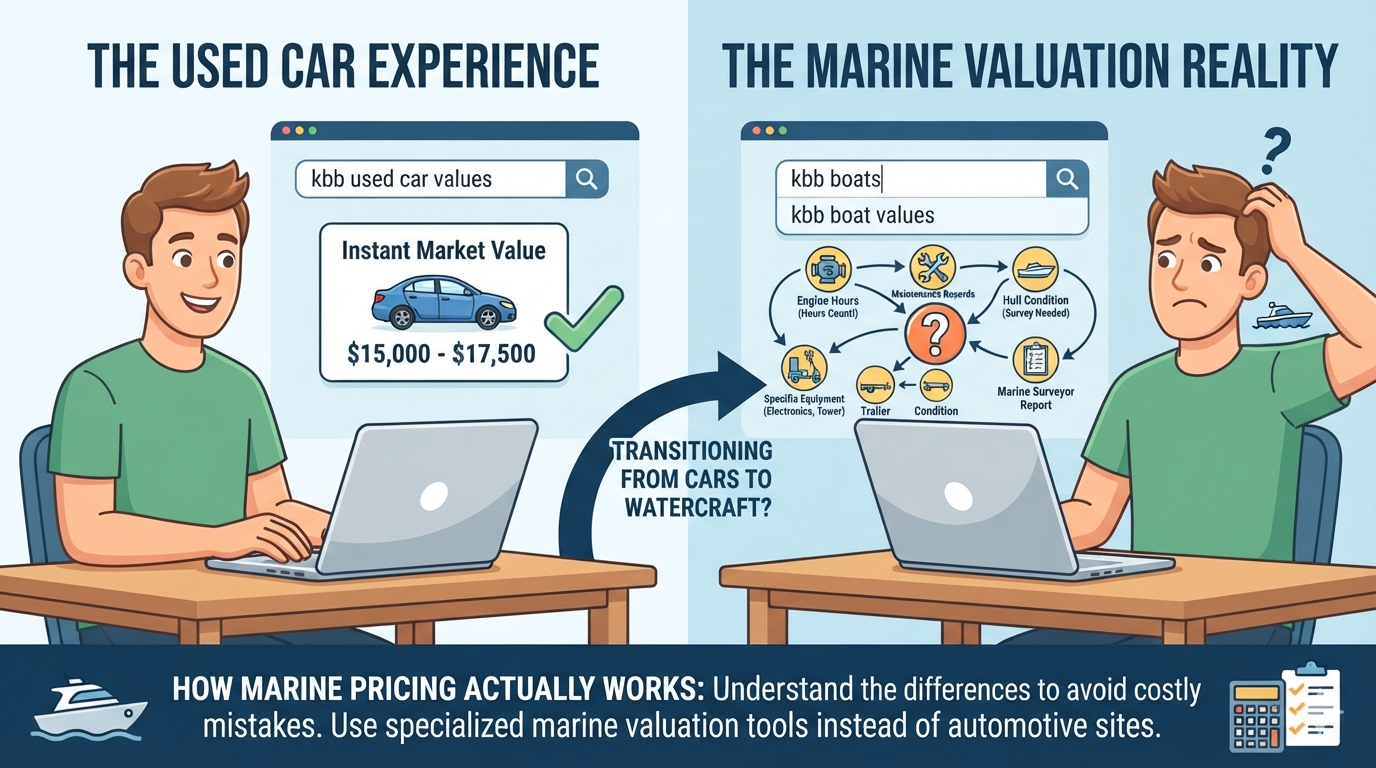
Have you ever tried to look up the price of a used car online? Most people quickly check automotive pricing tools to find a fair deal. When folks transition from cars to watercraft, they often search for KBB Boats expecting the same instant results. However, the reality of marine valuation is a bit different than what many first-time buyers expect. When you type terms into your browser, you might find many third-party sites using automotive terminology to grab your attention. Understanding how to correctly value your watercraft prevents costly mistakes during buying or selling. Let us dive into how marine pricing actually works and what tools you can use instead.
Does Kelley Blue Book Actually Price Marine Vessels?
Many people search for kelley blue book boats expecting an official pricing guide. The simple truth is that Kelley Blue Book does not provide values for boats, personal watercraft, or marine motors. They focus strictly on land vehicles like cars, trucks, and motorcycles. When you see websites claiming to offer official kbb boat values, they are usually using the famous name as a marketing trick. These independent sites want to attract shoppers who assume a marine blue book exists. Knowing this upfront saves you from relying on misleading data when you try to price a vessel.
Why Marine Valuation Differs From Cars
Valuing a watercraft is much more complex than pricing a standard sedan or truck. Cars drive on paved roads and experience predictable wear based mostly on mileage and age. In contrast, watercraft face harsh environments like saltwater, humidity, and constant exposure to the elements. Two identical models can have vastly different market prices depending on how well the previous owner maintained the engine and hull. Furthermore, aftermarket upgrades, custom electronics, and trailer conditions all play a massive role in final pricing. Because of these unique variables, standard automotive pricing models simply do not translate over to the water.
Exploring the NADA Guide and J.D. Power Values
Even though official automotive guides do not cover watercraft, the marine industry relies on established alternatives. Historically, the nada boat value guide served as the gold standard for pricing used vessels. This resource was later acquired and integrated into J.D. Power. It functions similarly to a traditional blue book by compiling nationwide sales data, manufacturer specifications, and historical trends. Buyers and insurance companies frequently check these figures to establish a trustworthy baseline. Keep in mind that these numbers represent broad averages rather than fixed prices for a specific local market.
Using Modern Online Marketplaces for Comparison
Another great way to determine a fair price is by checking active digital listings. Platforms like Boat Trader and specialized classified websites show what people are currently paying in your region. When you browse active listings, look for vessels that match your exact year, make, model, and engine type. Pay close attention to whether the listed watercraft include a trailer or upgraded electronics, as these extras change the overall worth. Tracking what similar models sell for gives you a realistic view of current supply and demand trends.
The Role of Engine Hours and Maintenance History
When evaluating a motorboat, engine hours matter just as much as mileage does for an automobile. A low-hour engine generally commands a much higher price because it indicates less wear over its lifetime. However, a well-maintained engine with higher hours can still hold great value if the owner kept detailed service records. Regular professional servicing shows that the vessel was protected against premature mechanical failure. Always ask for maintenance logs before finalizing any purchase or sale to ensure the mechanical systems are fully sound.
Impact of Hull Condition and Structural Integrity
The physical shell of your watercraft dictates a large portion of its overall worth. Fiberglass hulls can suffer from hidden damage, blistering, or structural stress over years of heavy use. Fresh gel coats and clean transoms signal proper care and indoor storage during harsh winter months. If a hull requires major fiberglass repair, the cost can quickly outweigh the initial bargain of the purchase. Inspecting the lower unit and propeller for deep scratches or dents also helps you gauge how carefully the previous operator navigated shallow waters.
Seasonal Fluctuations in Marine Pricing
Timing plays a major role when you buy or sell a watercraft. Market demand typically peaks during the warm spring and early summer months as enthusiasts prepare for the water. During these high-demand periods, sellers can often command top dollar for clean inventory. Conversely, winter months usually bring reduced demand, leading to lower asking prices and potential bargains for cash buyers. Understanding these seasonal swings helps you time your transaction to maximize your budget.
Professional Marine Surveys as the Ultimate Check
When dealing with high-end cruisers, sailboats, or older vessels, online guides may not tell the whole story. Hiring an accredited marine surveyor provides an objective evaluation of the vessel’s true condition. A professional inspection uncovers hidden structural flaws, electrical faults, and safety equipment issues that casual buyers might miss. Insurance companies and financial lenders often require these detailed reports before approving policies or loans. Think of a survey as a protective investment that gives you total peace of mind.
Comprehensive Marine Valuation Comparison
| Valuation Source | Best Used For | Cost & Accessibility | Primary Data Focus |
| J.D. Power (NADA) | Standardized baseline comparisons | Varies / Subscription or free snippets | Manufacturer specs and historical trends |
| Online Marketplaces | Real-time local pricing analysis | Free public browsing | Active dealer and private listings |
| Marine Surveyor | In-depth physical inspections | Professional service fee | Structural integrity and mechanical health |
| AI Valuation Tools | Instant preliminary estimates | Free instant tools | Algorithmic market data matching |
Conclusion and Next Steps
Determining the right price for a watercraft takes a bit of extra research since official automotive blue books do not cover the marine industry. By utilizing J.D. Power guides, comparing active market listings, and checking engine hours, you can arrive at a fair number. Always account for seasonal trends and consider hiring a professional surveyor for major purchases. Ready to buy or sell your next watercraft? Drop a comment below with your specific make and model to share your valuation experiences!
Frequently Asked Questions
Is there an official Kelley Blue Book for boats?
No, Kelley Blue Book does not publish pricing guides for boats or marine equipment. They deal exclusively with automobiles and motorcycles. Any website claiming to offer official KBB marine values is using the name independently.
What is the best alternative to a blue book for watercraft?
The J.D. Power marine pricing tool, formerly known as NADA guides, serves as the primary industry standard for checking baseline book values. You can also compare live online classifieds for real-time market accuracy.
How do engine hours affect a boat’s resale value?
Lower engine hours suggest less wear and tear, which usually drives up the resale value. High hours are acceptable only if the owner provides a clean, well-documented service history.
Why do boat prices change throughout the year?
Demand shifts heavily based on the season. Prices tend to peak in spring and early summer when more people want to get out on the water. Winter months often bring lower prices and slower market activity.
Do I really need to hire a marine surveyor?
While optional for small aluminum fishing boats, a professional survey is strongly recommended for larger vessels and expensive yachts. It uncovers hidden structural or mechanical problems that protect your investment.