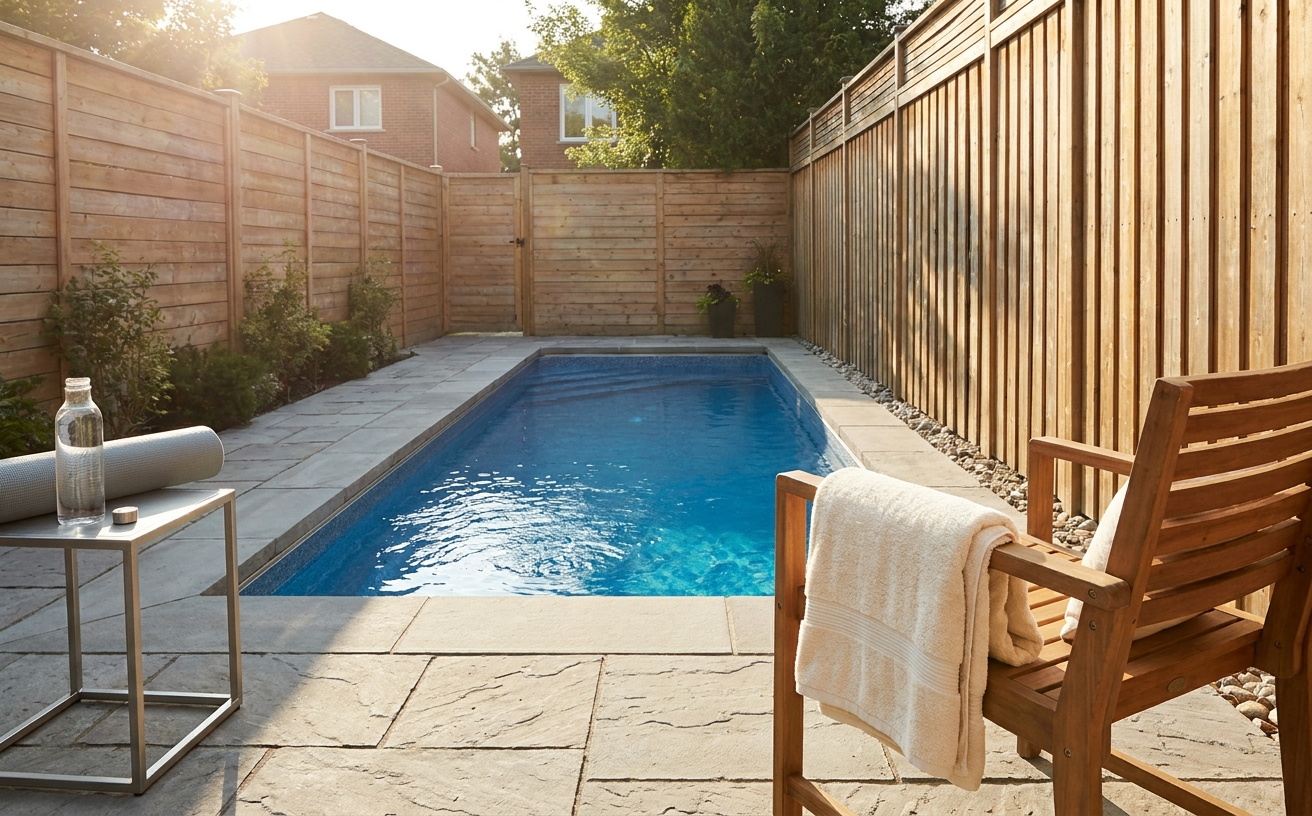
Building a Small-Backyard Swim Ritual That Feels Like Real Training
Not every home pool is built for laps. Many backyard pools are made for cooling off, relaxing, family time, and weekend use. They may be too short for traditional swimming. They may have steps, curves, shallow areas, or furniture close by.
Still, a small pool can support a meaningful swim ritual.
The key is to stop thinking of training only as distance. Swimming at home can be about rhythm, breath, resistance, focus, and consistency. A short pool can still help an adult build a routine that feels physical, calming, and repeatable.
For many American homeowners, this matters. Driving to a gym or community pool is not always realistic. Work runs late. kids need rides. weather changes. motivation fades once the day gets busy.
A backyard swim ritual removes some of that friction.
It turns the water you already have into a space for steady movement.
Define What Training Means to You
Before creating a routine, decide what training means in this stage of life.
It may not mean racing. It may not mean high intensity. It may not mean tracking every second.
Training can mean showing up three mornings a week. It can mean breathing better. It can mean moving without pounding your joints. It can mean building strength after a long workday. It can mean having a private place to reset.
This definition matters.
If you borrow someone else’s idea of training, the routine may feel too hard or too boring. If you define it for your real life, it becomes easier to keep.
A small backyard pool can support a personal version of fitness.
Choose a Repeatable Time
The best swim ritual is one you can repeat. Time matters more than ambition.
Pick a window that fits your household. Early morning before the house wakes up. Late afternoon after work. A short session before dinner. A quiet Saturday routine before errands.
Do not choose the time you wish you had. Choose the time you actually have.
A 20-minute swim ritual done consistently can be more valuable than a perfect one-hour plan that rarely happens.
The backyard makes consistency possible because the water is close.
Use that advantage.
Create a Start Signal
A ritual needs a start signal. This tells your body and mind that the session has begun.
It can be simple.
Place a towel on the same chair. Fill a water bottle. Set a timer. Put on the same playlist. Step onto the patio and take three slow breaths before entering the water.
These small actions create rhythm.
They also help you shift out of whatever came before. Work. parenting. errands. messages. chores.
The start signal says: for the next few minutes, this is the focus.
Let Small Space Create Better Focus
A small pool can feel limiting if you only think about distance. But it can become useful if you think about focus.
In a short pool, you notice your form. You notice breath. You notice how your shoulders move. You notice whether your kick is rushed. You notice how quickly your mind gets impatient.
That awareness can be valuable.
Instead of measuring progress only by yards or laps, measure control. Can you stay smooth? Can you breathe evenly? Can you move for a set amount of time without losing rhythm?
Small space encourages attention.
Attention is part of training.
Give the Water a Consistent Role
Your backyard pool may already serve many roles. Kids play in it. guests use it. pets walk around it. family floats in it. The swim ritual needs its own role too.
Choose a few times when the pool becomes a training space.
During those windows, remove toys from the water. Keep the deck clear. Put your towel and water in the same place. Let the household know this is a quiet swim period.
You do not need to claim the pool for hours.
You only need a short protected window.
When the water has a defined role, the routine feels more serious without becoming stressful.
Build a Rhythm in Place
If the pool is short, current-based movement can help create a steadier rhythm. Some homeowners explore a swim jet as one way to think about continuous movement in a smaller backyard pool, alongside other training choices like intervals, resistance drills, breath practice, and water walking.
The point is not to copy a competitive swim setup.
The point is to create a repeatable pattern that lets the body work without needing a full-length lap lane.
Small pools can still support consistency when the routine is designed around the space.
Try Time-Based Sets
Distance can be awkward in a backyard pool. Time-based sets often work better.
For example:
- Two minutes easy movement
- One minute focused breathing
- Three minutes steady effort
- One minute rest
- Repeat three times
This kind of routine is simple and flexible.
You can adjust it based on energy, weather, and schedule. You can make it easier on busy days or more challenging when you feel strong.
Time-based training also reduces frustration.
You are not counting short laps over and over. You are staying present for a set period.
Include Water Walking
Water walking is underrated. It can be gentle or challenging depending on pace, depth, and intention.
Walk forward. Walk backward. Step sideways. Move slowly with control. Keep posture tall. Notice how the water resists each movement.
This works well in smaller pools.
It is also useful on days when full swimming feels like too much but you still want movement.
A strong ritual should have lighter options.
That keeps you from skipping the session entirely.
Use Breath as the Anchor
Breath is one of the best reasons to train in water. The pool naturally asks you to notice it.
Begin each session with calm breathing. During movement, avoid rushing. If your breath becomes tense, slow down. If your mind wanders, return to the rhythm of breathing and movement.
This can make the swim ritual feel different from land workouts.
It becomes physical and mental at the same time.
For adults with busy schedules, that combination can be one of the biggest benefits.
The water gives the mind something simple to follow.
Keep the Deck Minimal During Training
A cluttered deck can break focus. Toys, hoses, towels, snacks, and furniture too close to the edge make the pool feel like a family traffic zone instead of a training space.
Before each session, do a quick deck check.
Move toys. clear the entry point. place your towel and water. make sure the walking path is open.
This takes less than two minutes.
It gives the routine a cleaner start.
The environment does not have to be perfect, but it should support the kind of attention you want.
Track Feeling, Not Just Performance
If you want the ritual to last, track more than effort.
After each session, write one short note:
Felt calm.
Breathing was rushed.
Shoulders tight.
Good rhythm today.
Needed a lighter session.
Morning works better than evening.
These notes help you understand what the routine gives you.
They also prevent training from becoming only about intensity.
A backyard swim ritual should support your life, not become another pressure point.
Let the Routine Stay Private
Not every fitness habit needs to be shared, posted, or turned into a challenge. Some routines work better when they stay private.
A backyard swim ritual can be one of those.
It belongs to the quiet part of the day. It does not need comparison. It does not need an audience. It does not need perfect metrics.
Private consistency can be powerful.
A person who moves steadily, breathes better, and returns to the water week after week is building something real.
Review the Ritual Each Month
Once a month, ask whether the routine still fits.
Is the time working? Is the session too long? Do you need more variety? Is the pool area easy to use? Does the household respect the swim window? Are you feeling better after sessions?
Adjust as needed.
A ritual should evolve with life.
The best routine is not the one that looks impressive on paper. It is the one that keeps bringing you back to the water.
Small Pools Can Still Hold Serious Habits
A backyard pool does not need to be long to support meaningful movement. It needs a clear role, a repeatable time, a simple structure, and enough focus to make the session feel intentional.
Training at home can be quiet. It can be personal. It can be short. It can fit into real life.
A small pool may not offer endless distance, but it can offer something just as valuable: a place to return to. And you can use iGarden swim jet X series to get a better swimming experience even in a small pool.
When the water is close, the habit has fewer excuses.
That may be the strongest training advantage of all.